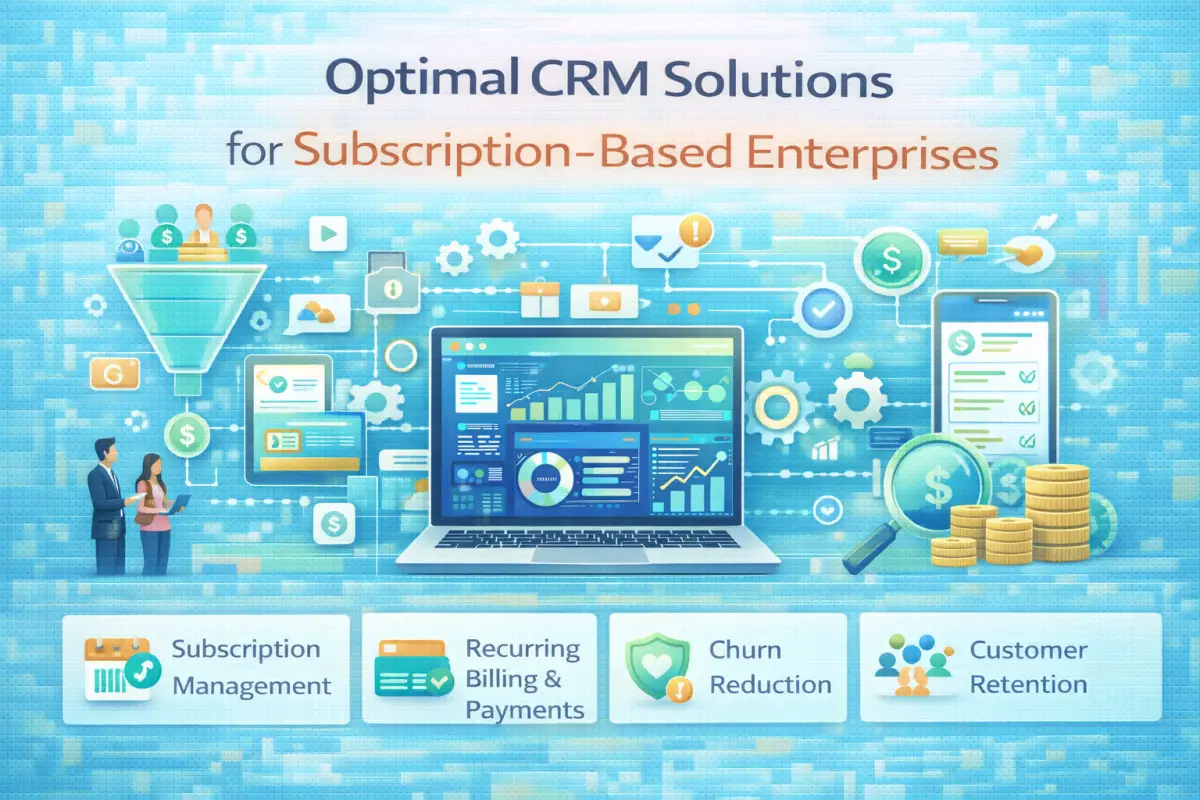
Optimal CRM Solutions for Subscription-Based Enterprises
Why Subscription-Based Enterprises Require a CRM
Subscription-based businesses thrive on building lasting relationships with customers. A Customer Relationship Management (CRM) system is essential for managing these relationships effectively. It helps track customer interactions, manage subscriptions, and analyze customer behavior. With the right CRM, companies can foster loyalty and enhance customer satisfaction.
As subscription models grow in popularity across various industries, it becomes increasingly important to have a system that can handle recurring billing and customer data management. A CRM designed for subscription services can streamline processes, ensuring that companies can focus on growth and retention.
Key Features to Seek in a Subscription CRM
When selecting a CRM for subscription businesses, certain features stand out as particularly beneficial. One crucial aspect is the ability to manage recurring billing. The CRM should also support various payment methods, making transactions easier for both customers and the business.
Another important feature is customer segmentation. This allows businesses to group customers based on their behavior or subscription type. Additionally, reporting and analytics tools are vital for tracking performance and understanding customer trends. These insights can inform marketing strategies and help in decision-making.
Leading CRM Solutions for Subscription Enterprises in 2026
As we look ahead to 2026, several CRM solutions are emerging as leaders in the subscription space. These platforms have been recognized for their features and user experience. Solutions like Pega CRM and Luminwise are gaining traction due to their ability to cater specifically to subscription models.
Also worth considering are platforms highlighted in reports from reputable sources like Forbes Advisor. They often feature comparisons of the best CRM tools, providing insights into performance, pricing, and customer feedback. This information can help businesses compare options and select the best fit for their needs.
Advantages of Implementing a CRM in Subscription Businesses
Utilizing a CRM can yield numerous benefits for subscription-based companies. One primary advantage is improved customer retention. By understanding customer behaviors, businesses can tailor their offerings and communications to keep clients engaged.
A CRM can also enhance operational efficiency. Automating routine tasks like billing and customer outreach saves time and reduces the likelihood of errors. This allows teams to focus on more strategic activities that drive growth.
Choosing the Right CRM for Your Subscription Business
Selecting the appropriate CRM involves several considerations. Begin by assessing your business needs. Consider how many customers you serve and the scale of your operations. This can help narrow down options.
Next, evaluate the features offered by different CRMs. Ensure they match your requirements for customer management, billing, and reporting. It’s also wise to read reviews and possibly request demos to get a feel for the user experience. A CRM that is user-friendly can significantly enhance adoption within your team.
Best Practices for Implementing a Subscription CRM
Successfully implementing a CRM requires careful planning. Start by training your team to ensure they understand how to use the system effectively. Clear communication about the benefits of the CRM can encourage buy-in from all users.
Regularly review and update your CRM data. Keeping information accurate is vital for achieving the best results. Additionally, consider setting specific goals for what you want to achieve with the CRM, such as increasing retention rates or improving customer satisfaction scores.
Case Study: SaaS Company Success with Subscription CRM
A notable example of effective CRM usage is a SaaS company that adopted a subscription CRM to manage its client base. By implementing a system that tracked user engagement and feedback, the company identified areas for improvement in its service.
This proactive approach led to a significant reduction in churn rates. With targeted marketing campaigns based on customer data, the company was able to re-engage lapsed users and improve overall satisfaction. This case illustrates how a well-implemented CRM can transform a subscription business.
Conclusion
In conclusion, a CRM tailored for subscription businesses is not merely an option; it is a necessity in today’s competitive landscape. Choosing the right CRM can lead to improved customer relations, operational efficiency, and ultimately, business growth. With the right tools and practices, subscription-based companies can thrive and adapt in a rapidly evolving market.
FAQs
1. Can a subscription CRM integrate with existing payment gateways?
Yes, many subscription CRMs offer integration options with various payment gateways, simplifying the billing process.
2. How does a CRM help reduce churn?
A CRM helps reduce churn by enabling businesses to understand customer behavior and preferences, allowing for timely interventions and personalized communication.
3. Is a CRM necessary for small subscription businesses?
While not mandatory, a CRM can be incredibly beneficial for small subscription businesses by streamlining operations and improving customer relations.
4. Can subscription CRMs handle multiple plans and tiers?
Most subscription CRMs are designed to manage various plans and pricing tiers, making them suitable for businesses with diverse offerings.
5. What KPIs should I track with a subscription CRM?
Key performance indicators to track include customer acquisition cost, lifetime value, churn rate, and monthly recurring revenue.