A Practical Guide to CRM Implementation for Faster Returns
Importance of CRM Implementation for Top-Tier Companies
For large-scale businesses, effectively deploying a Customer Relationship Management (CRM) system can be a game changer. These systems help organizations streamline operations, improve customer interactions, and enhance data management. By adopting a CRM, top-tier companies can centralize customer information, enabling teams to work more efficiently and make informed decisions.
Moreover, a robust CRM implementation can lead to increased customer satisfaction. When businesses have access to comprehensive customer data, they can tailor their offerings and address client needs more effectively. This leads to stronger relationships and ultimately boosts customer loyalty.
Understanding CRM ROI: A Financial Overview
Measuring the return on investment (ROI) from a CRM system is essential for justifying the initial investment. To calculate ROI, businesses should consider both tangible and intangible benefits. Key metrics to focus on include increased revenue from improved sales processes, reduced churn rates, and enhanced customer retention.
Businesses should track specific financial indicators like Monthly Recurring Revenue (MRR) and Annual Recurring Revenue (ARR). Additionally, understanding customer acquisition costs and the lifetime value of a customer is crucial. These insights help in evaluating the effectiveness of the CRM system over time.
Step-by-Step Strategy for CRM Implementation
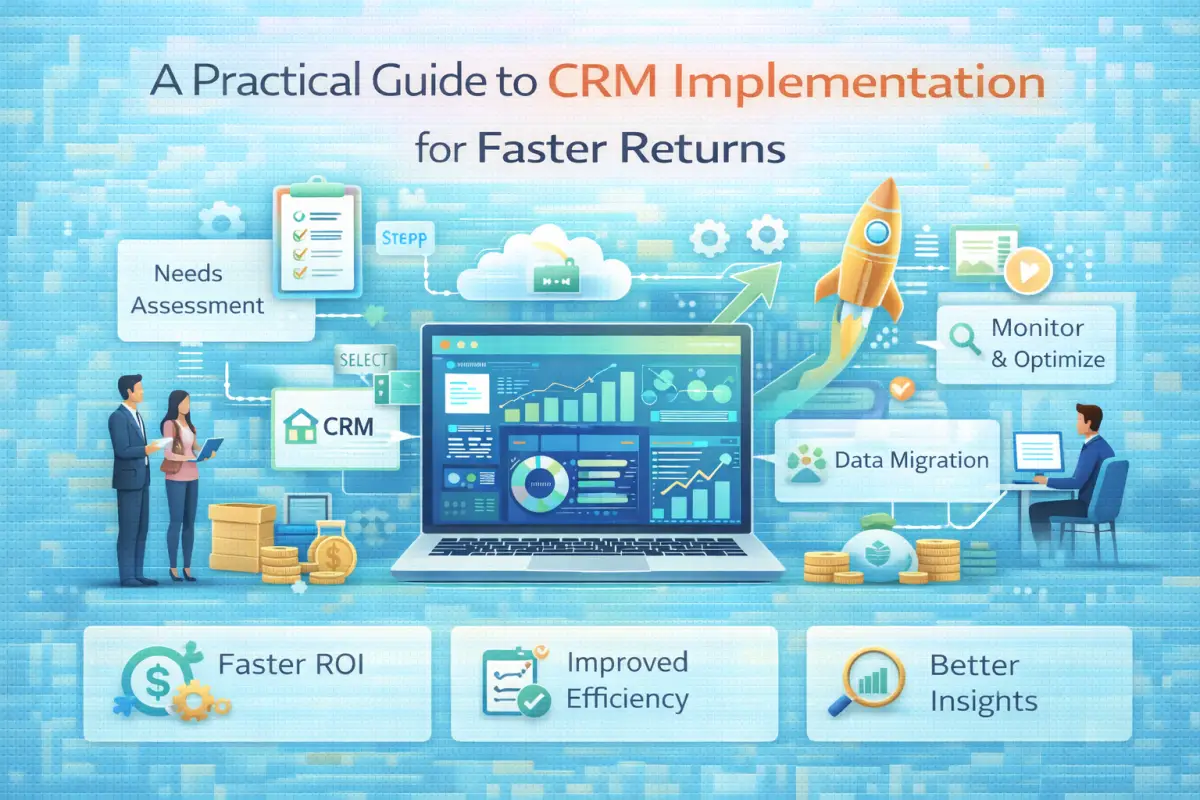
Implementing a CRM system involves several critical steps to ensure success. Here’s a breakdown of a strategic approach:
- Define Business Objectives: Start by identifying what you aim to achieve with the CRM. Setting clear goals will guide the whole implementation process.
- Select the Right CRM Platform: Choose a CRM that aligns with your business needs. Consider factors like scalability, features, and integration capabilities.
- Data Migration & Cleanup: Prepare existing customer data for transfer. Clean up any inaccuracies to ensure the new system operates smoothly.
- Customization & Integration: Tailor the CRM to fit your business processes. Integrate it with other tools to enhance functionality.
- Training & Adoption: Provide comprehensive training for staff to ensure they are comfortable using the new system. Encourage adoption through regular feedback sessions.
- Monitor ROI Metrics: Regularly assess performance metrics to track the effectiveness of the CRM system.
Common Obstacles in CRM Implementation
Despite the potential benefits, businesses often face challenges during CRM implementation. One common issue is resistance to change among employees. Staff may be apprehensive about adopting new technology or altering established workflows.
Another significant challenge is data quality. If the data transferred to the CRM is incomplete or inaccurate, it can hinder the effectiveness of the system. Additionally, lack of proper training can lead to underutilization of the CRM features.
Strategies to Maximize ROI
To ensure you get the most out of your CRM investment, consider these best practices:
- Engage Stakeholders: Involve key stakeholders in the decision-making process to foster a sense of ownership and commitment.
- Set Realistic Expectations: Understand that ROI may not be immediate. Regularly review goals and adjust strategies as needed.
- Utilize Analytics: Leverage the analytics tools within your CRM to gain insights into customer behavior and preferences, which can inform future strategies.
Case Study: Retail Company Achieves 60% ROI in One Year
A notable example is a prominent retail company that successfully implemented a CRM system and achieved a 60% ROI within a year. By focusing on customer engagement and personalized marketing, they significantly increased their sales and improved customer retention rates.
Their success can be attributed to their strategic approach of tailoring the CRM system to their specific needs, providing thorough training for their staff, and continuously monitoring their performance metrics. This dedication allowed them to refine their strategies and adapt to changing market dynamics.
The Future of CRM Implementation: Embracing AI and Predictive Analytics
As technology evolves, the future of CRM systems lies in artificial intelligence and predictive analytics. These advancements promise to enhance customer experiences by providing deeper insights into customer behavior and preferences.
AI can help businesses predict trends, automate repetitive tasks, and personalize communication. By leveraging these tools, companies can improve their CRM strategies, ensuring that they remain competitive in a fast-paced market.
Conclusion
Implementing a CRM system is a vital step for any business looking to improve customer relationships and drive sales growth. While challenges exist, a well-planned strategy can lead to significant benefits. By focusing on clear objectives, choosing the right tools, and continuously monitoring performance, companies can achieve a strong ROI on their CRM investment.
In a rapidly changing business landscape, staying ahead means adapting to new technologies and methodologies. Embracing CRM implementation not only enhances customer interactions but also positions businesses for long-term success.