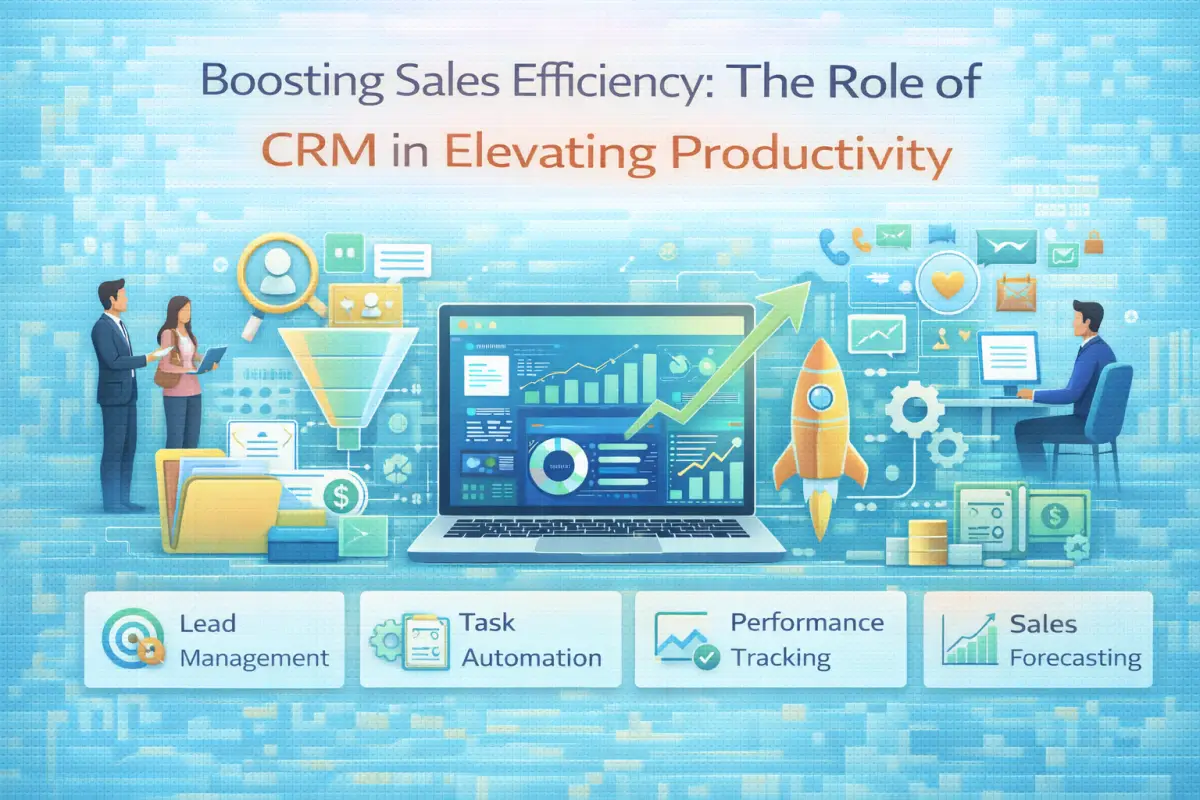
Boosting Sales Efficiency: The Role of CRM in Elevating Productivity
Understanding Sales Productivity
Sales productivity refers to the effectiveness of a sales team in converting leads into customers. It encompasses various factors, including the time spent on selling activities, the quality of interactions with prospects, and the overall efficiency of the sales process. When sales teams are productive, they can close more deals and generate higher revenue.
To measure productivity, organizations often evaluate metrics such as conversion rates, sales cycle length, and the overall volume of sales. A focus on improving these metrics can lead to significant enhancements in performance. As businesses aim to increase revenue and growth, understanding what drives productivity is essential.
How CRM Transforms Sales Processes
Customer Relationship Management (CRM) systems are designed to streamline and enhance sales processes. These tools centralize customer information, making it easily accessible for sales teams. With a CRM, sales representatives can quickly retrieve data about leads, track interactions, and manage follow-ups more efficiently.
Moreover, CRM systems provide insights into customer behavior and preferences. This information allows sales teams to tailor their approaches more effectively, leading to improved engagement and higher chances of closing sales. By automating routine tasks, CRMs free up time for sales reps to focus on building relationships and pursuing potential leads.
Key CRM Features Driving Sales Productivity
Several features of CRM systems contribute significantly to increased sales productivity. One of the most impactful is lead management. This allows teams to prioritize leads based on engagement and potential value, ensuring that the most promising opportunities receive immediate attention.
Additionally, automation capabilities within CRMs can handle repetitive tasks such as follow-up emails and appointment scheduling. This helps to reduce the administrative burden on sales reps, enabling them to spend more time on selling activities. Reporting and analytics tools also provide valuable insights into sales performance, helping teams to identify areas for improvement.
Case Study: CRM Implementation in Tier-1 Markets
In tier-1 markets like the US, UK, Canada, and Australia, companies have successfully utilized CRM systems to boost sales productivity. For instance, a leading telecommunications provider adopted a CRM solution that enabled their sales team to access customer data in real-time. As a result, they saw a 40% increase in productivity within just six months.
This implementation allowed the company to streamline its lead management process and enhance communication among team members. The sales team reported improved morale and engagement, contributing to a notable increase in overall sales performance.
Step-by-Step Guide to Boost Sales with CRM
To maximize the benefits of a CRM, sales teams can follow a structured approach:
1. Define Sales Goals
Establish clear, quantifiable objectives for your sales team. This clarity helps in aligning efforts and measuring success.
2. Map Your Sales Process
Understand the stages of your sales process. This knowledge allows for better tracking and management of leads throughout their journey.
3. Implement Lead Scoring
Develop a lead scoring system to prioritize leads based on their likelihood to convert. This helps teams focus their efforts on the most promising prospects.
4. Automate Communication
Utilize CRM automation tools to streamline communication with leads. This ensures timely follow-ups and consistent messaging.
5. Monitor and Optimize
Regularly review sales performance metrics. Use these insights to adjust strategies and improve overall productivity.
Benefits of CRM for Sales Teams
Implementing a CRM system offers numerous advantages for sales teams. Improved organization of customer data leads to better customer interactions and higher satisfaction. Additionally, the ability to track sales activities helps teams stay focused and accountable.
CRMs also enhance collaboration among team members. Sharing insights and updates fosters a collaborative environment, which can lead to innovative strategies and improved results. Furthermore, the analytics provided by CRMs help teams identify trends and refine their approaches based on data-driven decisions.
Choosing the Right CRM for Your Sales Team
Selecting the best CRM solution involves considering the specific needs of your sales team. Look for features that align with your sales strategy and processes. It's also essential to evaluate the user-friendliness of the software, as ease of use can significantly impact adoption rates.
Consider solutions that offer customization options, allowing teams to tailor the CRM to their workflow. Additionally, ensure that the CRM can integrate with other tools your team uses, as this can help streamline operations and improve productivity.
Conclusion
CRM systems play a vital role in enhancing sales productivity by providing tools that streamline processes and improve customer engagement. By centralizing information and automating routine tasks, CRMs enable sales teams to focus on what truly matters—building relationships and closing deals. As businesses continue to seek ways to optimize their sales efforts, adopting a CRM can be a game-changer.
FAQs
1. How much productivity increase can I expect from a CRM?
Many companies report productivity increases of around 40% after implementing a CRM, depending on how effectively they use the system.
2. Which CRM is best for boosting sales?
The best CRM varies by organization, but solutions like Salesforce, HubSpot, and Zoho are popular choices among sales teams.
3. Can CRM integration save time for sales reps?
Yes, integrating CRM with other tools reduces manual data entry and streamlines workflows, saving valuable time for sales representatives.
4. Is mobile CRM effective for productivity?
Mobile CRM allows sales reps to access information on the go, improving responsiveness and productivity, especially for those frequently in the field.
5. How do I measure CRM ROI?
To measure ROI, track metrics such as increased sales, shortened sales cycles, and improved customer retention before and after CRM implementation.